By Gospel Music Ireland | 14 October 2026
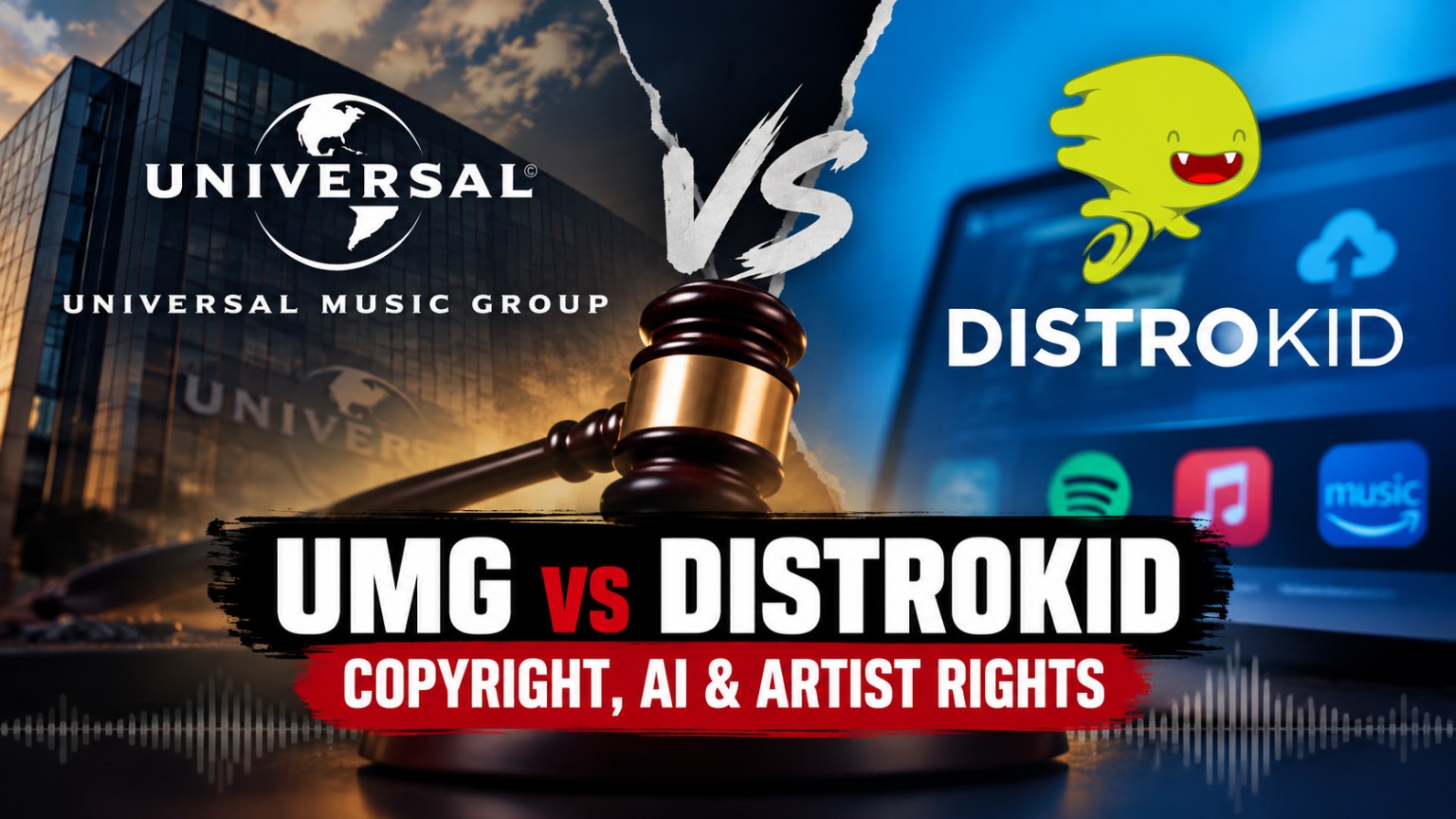
The music industry's battle over copyright infringement and artificial intelligence has taken a significant turn, with digital music distributor DistroKid confirming that it has removed recordings following claims made by Universal Music Group (UMG).
But while the dispute centres on protecting copyrighted recordings and tackling potentially deceptive AI-generated content, a troubling question is emerging: could legitimate independent artists become casualties of the industry's efforts to combat infringement?
Reports of music being removed without prior warning have sparked concern among independent musicians, some of whom insist their recordings are original or properly licensed.
For gospel, worship and Christian artists who rely on affordable digital distribution services to reach audiences worldwide, the dispute raises important questions about ownership, accountability and access to streaming platforms.
What is happening between UMG and DistroKid?
On 15 September 2026, Universal Music Group, Capitol Records and Capitol Christian Music Group filed a lawsuit against DistroKid in the United States District Court for the District of Delaware.
The lawsuit alleges that DistroKid has distributed recordings that infringe UMG's copyrights, including unauthorised remixes, altered versions of commercially released songs and recordings containing uncleared material.
UMG also accuses the distributor of facilitating large volumes of AI-generated music that it claims can mislead listeners and divert streaming revenue from legitimate artists.
According to Music Business Worldwide, UMG's investigation identified nearly 2,000 recordings it alleges infringed its copyrights.
DistroKid disputes the allegations.
Speaking to The Verge, DistroKid's Vice President of Artist Services, Amanda Ferri, confirmed that a very small number of recordings had been removed in response to UMG's claims. The company said it regretted the disruption and was working to minimise its impact on artists.
The allegations remain contested, and the lawsuit has not established that DistroKid is liable for the alleged infringements.
When copyright protection affects independent artists
Protecting copyright is essential to the music industry. Artists, songwriters, producers and record labels deserve to control and receive compensation for the commercial use of their work.
However, the recent removals have highlighted another side of the debate.
Several independent artists have publicly reported losing access to recordings they say were legitimately created or licensed.
The Verge reported complaints from artists including McGwire, who said several recordings had been removed, and rapper Insane Ian, who reported the removal of an original work.
These accounts have not established that the takedowns were legally incorrect, but they raise questions about how disputes are investigated and communicated.
For an independent artist, the sudden disappearance of a recording from streaming services can affect more than immediate royalties.
It can interrupt promotional campaigns, disrupt playlist placements, create uncertainty for listeners and potentially undermine investments made in recording, marketing and distribution.
Unlike major labels, independent artists may not have dedicated legal teams or industry representatives to challenge a copyright allegation.
If distributors are expected to respond quickly to copyright complaints, should they also be required to provide equally effective mechanisms for artists to challenge mistaken claims?
That question could become increasingly important as music platforms face growing pressure to identify infringing content.
Why Capitol Christian Music Group's involvement matters
One particularly significant aspect of the lawsuit for the Christian music industry is the involvement of Capitol Christian Music Group.
As a major participant in Christian and gospel music, Capitol Christian Music Group's presence among the plaintiffs connects this wider copyright dispute to a sector where independent distribution, cover recordings and collaborative music-making are commonplace.
Many gospel and worship artists independently record and release music, including interpretations of existing worship songs.
Others collaborate with producers, choirs, churches and musicians across international borders.
These practices can involve several layers of copyright ownership.
For example, permission to record a cover version of a worship song does not automatically provide permission to sample or reuse the original artist's master recording.
Similarly, purchasing a beat or instrumental does not necessarily mean that every sample incorporated into that production has been cleared for commercial release.
The distinction between composition rights, master recording rights and distribution permissions is therefore increasingly important.
There is no evidence from the reports reviewed that gospel artists have been disproportionately affected by the recent DistroKid removals. Nevertheless, the legal issues are directly relevant to the Christian music community.
Artificial intelligence: Innovation or an unfair advantage?
Beyond copyright infringement, the lawsuit raises another major industry concern: the rapid expansion of AI-generated music.
Generative AI tools have made it possible to produce large quantities of recordings in a fraction of the time traditionally required.
While AI can support legitimate creative work, its use also raises questions about transparency, authorship and the allocation of streaming revenue.
UMG alleges that some accounts have uploaded thousands of AI-generated tracks, creating an environment in which human musicians compete for visibility and revenue against potentially mass-produced content.
The lawsuit does not establish that all AI-generated music is unlawful. Rather, it challenges alleged deceptive distribution practices and specific copyright violations.
For independent artists, the concern extends beyond competition.
As distributors strengthen automated copyright detection and content screening, legitimate recordings may also face additional scrutiny.
A producer using licensed samples, a worship artist recording a cover or a musician using AI-assisted production tools could face questions about ownership and permissions.
The challenge for distributors is to identify genuinely problematic content without unfairly restricting legitimate creative expression.
What should Irish gospel and independent artists do?
Although the lawsuit is taking place in the United States, its consequences could extend to artists distributing music internationally.
Irish artists using DistroKid and similar services should consider reviewing their release documentation and ensuring that the rights associated with their recordings are clearly established.
In particular, artists should:
• Retain proof of ownership: Keep songwriting agreements, production contracts and documentation showing who owns the master recordings.
• Verify cover song permissions: Ensure the appropriate licences are in place for the territories and uses involved.
• Check beats and samples: Confirm that purchased instrumentals and sample libraries permit the intended commercial distribution.
• Maintain accurate metadata: Ensure songwriter credits, artist identities and recording identifiers are correct.
• Document AI usage: Keep records of any generative AI tools used and comply with applicable distribution policies.
• Preserve release information: Retain ISRCs, original audio masters and distribution records in case a release is challenged or needs to be restored.
Artists receiving copyright complaints should request clear details about the alleged infringement and use the distributor's dispute or appeal procedures where appropriate.
Who should carry the responsibility?
At the centre of the UMG–DistroKid dispute is a fundamental question about responsibility in the digital music economy.
Record labels have legitimate interests in preventing unauthorised exploitation of their recordings.
Distributors have responsibilities to maintain the integrity of the content they deliver to streaming services.
Streaming platforms must balance access, copyright compliance and protection against fraudulent activity.
But independent artists also deserve fair treatment.
An effective copyright enforcement system should not only identify potentially infringing recordings. It should also provide transparency, reasonable opportunities to respond and meaningful processes for correcting mistakes.
As artificial intelligence transforms music production and distribution, these safeguards may become just as important as the technologies used to detect infringement.
The bigger picture for gospel music
For the gospel music industry, this dispute highlights the importance of education, professional development and stronger support structures for independent artists.
Musicians should not have to become copyright lawyers to release their music, but they do need access to understandable information about their rights and responsibilities.
Distributors, labels, music organisations and industry bodies all have a role to play in making that information accessible.
At Gospel Music Ireland, we believe the future of independent music distribution must protect both intellectual property and the artists who create it.
The industry needs stronger safeguards against copyright infringement, deceptive content and streaming manipulation.
It also needs safeguards against wrongful removals that can damage the careers of legitimate independent musicians.
Protecting music should never mean leaving genuine artists without protection.
As the UMG–DistroKid lawsuit progresses, the outcome could influence how distributors manage copyright complaints, AI-generated recordings and artist appeals.
For independent artists in Ireland and beyond, it is a case worth watching.
Sources and further reading
• Music Business Worldwide — DistroKid confirms it has removed tracks in response to UMG claims, 12 October 2026.
• The Verge — DistroKid has been quietly taking down songs in response to UMG lawsuit, 10 October 2026.
• Reuters — UMG sues DistroKid for allegedly distributing AI music, 15 September 2026.
• US District Court for the District of Delaware — UMG Recordings, Inc. et al. v. DistroKid, LLC et al., Case No. 1:26-cv-01156.
Gospel Music Ireland will continue following developments in this case and their implications for independent recording artists.